
Honourable Speaker, Local government is where dignity is affirmed or denied. It is where water flows or fails, where refuse is collected or neglected, where roads are maintained or allowed to deteriorate. It is the sphere of government closest to the people, where the everyday realities of governance are felt most directly in households and communities. For many of our citizens, the performance of local government defines their experience of the state.
When municipalities function effectively, communities experience the true meaning of democracy through reliable services, responsive leadership, and accountable institutions. Conversely, when municipalities falter, it is the dignity, livelihoods, and aspirations of our people that are placed at risk.
Honourable Speaker, the work of local government does not take place in isolation. In many of our rural communities, governance and development are strengthened through the partnership between municipalities and traditional leadership institutions.
Recognised in law and practice through the Traditional and Khoi-San Leadership Act, traditional leaders continue to play an important role in community development, social cohesion, and the facilitation of participatory governance at local level. It is therefore essential that municipalities and traditional leadership structures work in collaboration to advance development, improve service delivery, and ensure that the voices of communities are effectively represented in governance processes.
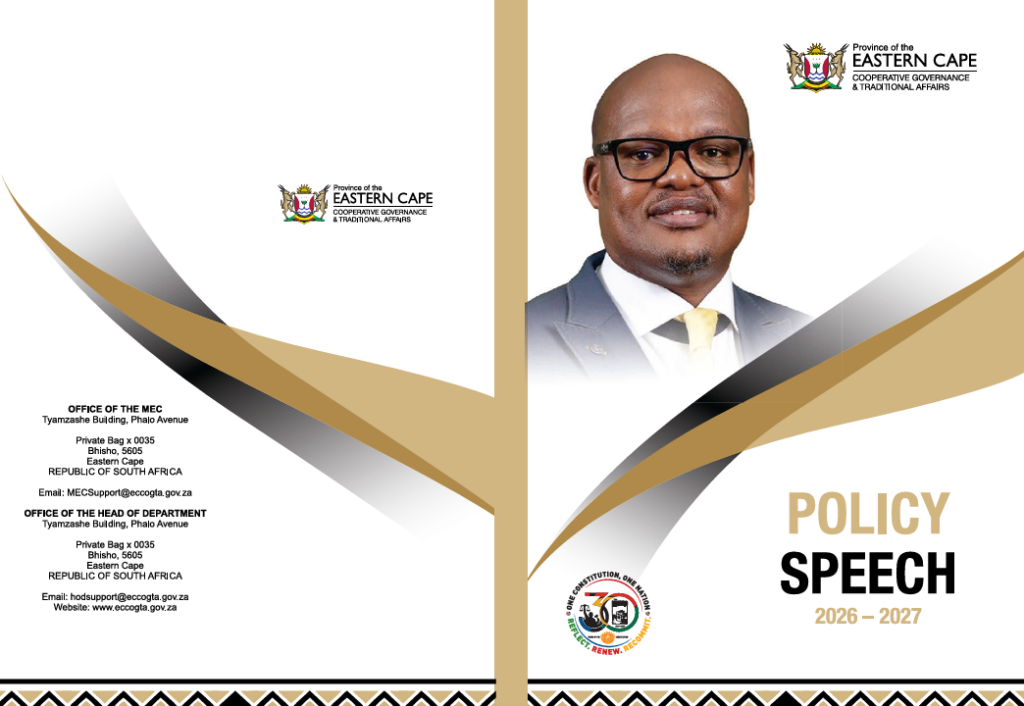
Honourable Speaker, today, as I table the 2026/27 Budget Vote 07, I do so confident that our Department is on a firm reform trajectory focused, stabilised, and outcome driven. The budget before this House is directed at strengthening municipalities, supporting governance institutions, and accelerating the delivery of services that restore dignity and improve the lives of our people.